I’m going to say publicly what I’ve been saying privately for months.
One of the greatest challenges of serving in local government is holding two truths at the same
time.
In Area G, we have a great deal to celebrate. Over the past few years, our community has
benefited from significant investments in water infrastructure, including critical upgrades at the
Stocking Lake Dam, the water filtration interconnect, the Saltair Centennial Revitalization, the
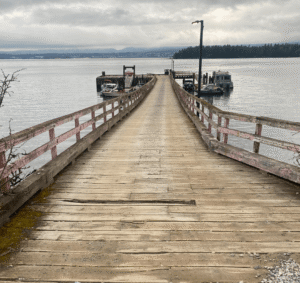
Thetis Island Community Dock upgrades, and other major initiatives.
Those accomplishments happened because dedicated staff worked hard to deliver them, and they deserve sincere recognition.
But two things can be true at once.
We can celebrate important accomplishments while also acknowledging that Land Use Services
has seriously damaged public confidence in the CVRD.
I don’t make that criticism lightly. I make it reluctantly, because rebuilding trust begins with
acknowledging where trust has been lost.
What troubles me most isn’t simply that mistakes were made. Every organization makes
mistakes. It is the absence of meaningful public reflection about them.
Whether it was the Comprehensive Zoning Bylaw, the Modernized Official Community Plan, or
the growing frustration surrounding development application timelines, many residents came
away feeling their voices were not heard, their concerns were not respected, and their time was
not valued. The Comprehensive Zoning Bylaw was ultimately halted, and the Board has since
directed staff to begin repealing the Modernized Official Community Plan. Regardless of where
one stood on those issues, both processes fell well short of earning broad public confidence
That is why I found the recent Land Services Department Strategic Plan Update report so
disappointing. It reads as though none of those events ever happened. There is little
acknowledgment of the loss of public confidence, little reflection on what went wrong, and little
indication of how the organization intends to rebuild trust.
Where is the institutional accountability? Where is the honest assessment of what went wrong?
What lessons have been learned, and how will they shape future decisions?
These are not political questions. They are leadership questions.
Residents Deserve Better
Residents aren’t asking for perfection. They are asking for a system that works.
They want timely decisions, clear communication, predictable processes, and confidence that
their applications won’t become stalled in an opaque and frustrating system.
Every month I hear the same message from residents, builders, and business owners: nothing
seems to move forward. Some have become so discouraged that they simply give up. Whether
that perception perfectly reflects reality is almost beside the point. In public service, perception
matters because public confidence matters.
Administrative delays have real consequences. They postpone housing projects, delay business
investment, increase costs, and create unnecessary stress for families trying to move forward
with their lives.
Earlier this year, the Board directed staff to prioritize clearing in-stream development
applications. That was exactly the kind of practical action our community wanted to see.
Now it is time to ask equally practical questions.
How many applications have actually been completed?
How much have processing times improved?
Have backlogs been reduced?
If we are going to celebrate success, we also need to measure it. Residents deserve clear
answers, not vague assurances that work is “ongoing.”
Most importantly, residents are the people we serve. They are not problems to be managed or
files to be processed. Every interaction with local government should leave people feeling
respected, informed, and valued
Accountability Builds Trust
One of the most valuable lessons I’ve learned in both business and public service is that
accountability is never a sign of weakness. It is one of the clearest demonstrations of
leadership.
When an organization stumbles, the response should never be to pretend nothing happened. It
should be to acknowledge the problem, understand its root causes, explain what has changed,
and demonstrate how the organization will do better next time.
That is how trust is rebuilt.
Unfortunately, many reports presented to the Board describe ongoing initiatives and strategic
priorities but rarely pause to examine the lessons learned from the Comprehensive Zoning
Bylaw, the Modernized Official Community Plan, or other major planning initiatives that failed to
earn broad public confidence.
That reflection is essential if we hope to restore trust and avoid repeating the same mistakes.
Accountability also requires measurable standards. Residents should know how long
applications take, whether service targets are being met, and what improvements are being
made. Government should measure its performance with the same commitment to continuous
improvement that it expects from everyone else.
Leadership Means Listening
I take no joy in writing this.
I respect the people who work at the CVRD, and I know many staff members care deeply about
our communities.
My concerns are not personal, nor are they directed at front-line employees.
In fact, it disheartens me that I have to say these things publicly. I have raised these concerns
quietly, respectfully, and repeatedly through one-on-one conversations for many months. I have
consistently tried to work collaboratively because meaningful change is almost always best
achieved through cooperation.
But when quiet diplomacy fails to produce meaningful change for the people I represent, public
accountability becomes one of the few tools an elected official has left.
Our residents expect us to ask difficult questions. They expect us to insist on better
performance. Most importantly, they expect us to respond to setbacks with humility rather than
defensiveness.
The good news is that trust can be rebuilt. It starts with honest reflection, transparent reporting,
measurable performance standards, and a culture that views every setback as an opportunity to
improve.
None of this should come as a surprise. These are concerns I have raised privately for months.
Now it is time to acknowledge where we fell short, learn from those mistakes, and move
forward.
Accountability is not about assigning blame. It is about building a better organization.
Our communities deserve a land use system that is efficient, responsive, predictable, and
accountable.
Our residents deserve nothing less.