
Four years ago, I asked for your trust. I promised to listen, protect public money, and bring Area G’s concerns to the Board table.
As this term comes to an end, you deserve a clear account of what that work produced. You also deserve to know what remains unfinished and where I need to do better.
We can point to results: improved courts at Centennial Park, air conditioning at the Saltair Community Centre, repairs to the Thetis dock, water main replacements, and repaved approaches to Davis Lagoon Bridge. There is also progress on larger projects, including the Ladysmith water partnership and funding for Stocking Lake Dam work.
Those results belong to the residents, volunteers, staff, Board colleagues and partners who helped make them happen. My responsibility is to explain what I contributed, what decisions I supported, and what still needs follow-through.
That responsibility includes water. I supported the direction we took. Residents are now raising serious concerns about the taste, and I need to respond to what people are experiencing today.
The record at a glance
– Community assets: Centennial Park court improvements, community centre cooling, a long-term society lease and reserves for future maintenance.
– Water infrastructure: Completed water main work, dam funding and a framework for negotiating treated water supply from Ladysmith. The dam replacement and interconnection remain unfinished.
– Island needs: Thetis dock repairs, support for Ruxton fire preparedness and work with Penelakut leadership on marine access.
– Road safety: Bridge approach repaving, the South Oyster School Road speed zone, and continued pressure on winter maintenance.
– Public money: A Board-supported request for restrained budget options and continued advocacy for a 2.5% target. The approved regional increase was 3.87%.
– Planning and engagement: Opposition to MOCP adoption, support for changing course on planning, and community meetings to hear concerns and explain decisions.
Saltair water
I have heard your concerns. The current taste is unacceptable. We need to revisit the plan, and all options are on the table.
Saltair’s water situation has developed over years of trying to meet provincial treatment requirements. A standalone filtration plant was considered too expensive, and CVRD engineering recommended wells as part of the solution. Earlier projections suggested the wells could meet average winter demand, but they were not presented as a complete solution for peak summer demand. The plan also involves connecting to Ladysmith for treated water.
The memorandum of understanding announced in June 2026 established a framework for negotiating the supply of treated bulk water from Ladysmith’s filtration plant. The agreement is still to be finalized, and infrastructure work remains to be completed.
We also continued replacing aging water mains. The CVRD lists work on Valdon Road, Porter Road, and Chemainus Road between Olsen and Southin Roads as completed in 2025. That work improves the distribution system, but it does not solve the treatment and taste concerns.
The proposed connection would add filtered water from Ladysmith to the system. We still need clear technical advice on how the future blend would affect taste and hardness. Residents deserve that explanation before being asked to accept it as the solution.
I relied on technical advice, but I also supported the approach. I need to account for that decision. I am asking how taste was assessed before the wells were brought into use, what should have been identified earlier, and what can be changed now. I have sought advice outside the CVRD to help examine the options.
Not everyone is experiencing the same problems with taste and hardness, but I am hearing from more residents who are unhappy. I drink this water too. A future connection does not resolve what comes out of the tap today, and calling this an interim arrangement does not make the current taste acceptable.
At an October 6 meeting, residents present agreed that we needed to reconsider the options. I am prepared to support a temporary return to Stocking Lake water alone, provided we understand the implications for supply, treatment requirements, and costs. I am asking for those answers now.
I have spoken with the CVRD’s CAO and other managers. They have committed to providing me with options during the week of October 5. Updated water testing is also expected to be completed that week. Once I receive the results, I will share them and ask whether mineral levels are declining as staff expected.
Residents also deserve a dated explanation of the current water blend, how it changes, and how the wells’ effects on Stocking Creek are being monitored. We need clear answers about treatment requirements, hardness and the effects on household appliances. I intend to meet with those residents again before October 13 and report back on the options and testing results.
I am beginning to assemble a working group of engineers and contractors, independent of the CVRD, along with residents, to advise me after the election. We have local knowledge worth drawing on. I want that group to help us examine the decisions that brought us here, test the available options, and keep residents’ needs front of mind.
Water quality is nonnegotiable. We need to address both safety and palatability. I also want full transparency regarding the proposed Ladysmith agreement, its costs, and its implications for Saltair’s long-term water security.
Our community centre, parks and trails
The Saltair Community Centre is used for classes, daycare, programs, and community gatherings. In August 2025, it was fully outfitted with air conditioning. That means a more comfortable space for users, especially during the summer.
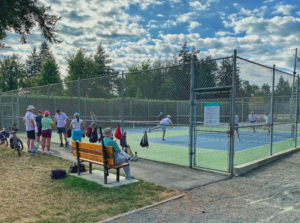
In 2023, Saltair Centennial Park received major improvements, including resurfaced tennis courts, improved basketball courts and new pickleball facilities. We also supported improvements along the Cowichan Valley Trail. Our neighbours and families use these places every day.
Early in the term, I supported borrowing to bring the Centennial Park revitalization work forward rather than stretching it over seven years. That meant residents could use the improved courts sooner. The work built on earlier planning and community input, with staff and our local parks volunteers helping carry it forward.
I also supported the community centre retrofit, including heat pumps and window improvements, and the Board’s approval of a 20-year lease for the Saltair Community Centre Society. The volunteers who operate the centre need a stable foundation to plan programs and look after the building.
Playground safety and accessibility have also received attention. I supported the planned change to engineered wood fibre around the Centennial Park play structure and explained the reasons to residents. That work needs to be installed and maintained properly to deliver the intended benefits.
We also established reserves for the Saltair Community Centre and Thetis community dock. Looking after these assets means setting money aside for future needs, as well as doing the work people can see today.
Getting road concerns acted on
Residents raised concerns about the approaches to Davis Lagoon Bridge. I brought the issue forward in August 2025, and both the north and south approaches were repaved in less than 75 days. Mainroad’s crews deserve credit for getting the work done quickly and well.
The new 30 km/h zone on South Oyster School Road is another practical improvement around the community centre and park. Children, pedestrians, and people attending programs all use that area. Slower traffic matters there.
I also contacted the transportation ministry and Mainroad about winter maintenance after residents experienced frustrating service. Both reported adjustments ahead of the 2025 winter season. That was a response to our concerns, and I will continue to follow up on the service residents actually receive.
Road safety work also means bringing the transportation ministry, police and residents into the same conversation. Paving, traffic speeds, crossings, and winter service all need attention, and I have repeatedly raised these concerns with the responsible agencies.
The province is responsible for these roads. My job is to bring local concerns to the people who can act, keep following up, and report back.
Our island communities
Looking after Area G’s infrastructure also means understanding how needs change across our communities. Growing up on Thetis Island taught me how much reliable marine access matters, especially when someone needs emergency help.
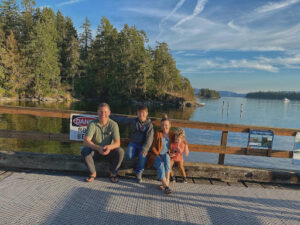
The CVRD lists repairs to the Thetis community dock as completed in 2024, and we have established reserves to help maintain it in the years ahead. Residents rely on marine access, and keeping this asset in good condition matters.
On Ruxton, I worked with residents on fire preparedness and supported funding to help acquire two water cisterns. Marine access and evacuation remain important concerns. Work on preparedness needs to reflect the island’s trails, limited access, and the practical challenges of getting help there. Support for equipment and planning is progressing, but gaps in emergency response still need attention.
With the Penelakut Tribe, I have met with Chief Jack and Council about shared priorities, including the community dock. Following those discussions, I was given permission to help raise awareness of the dock’s needs and support efforts to find a way forward.
For island residents, a dock is an essential connection for medical care, supplies, and emergency access. My role is to work with the Nation’s leadership and help bring the issue to the attention of the governments and agencies that can act. That starts with respect for the Nation’s authority. A funded solution for the Penelakut dock is still a work in progress.
Saltair, Thetis, Penelakut, and Ruxton each have their own needs. Representing Area G means making time to understand them.
Pushing back on tax increases
I know that tax increases affect household budgets. Residents expect me to question spending, and I have.
Ahead of the 2026 budget, I brought forward a resolution asking staff to prepare a budget with a maximum increase of 4%, with an option at 2.5%. The Board supported that request.
I continued to advocate for the 2.5% target. The approved 2026 CVRD requisition increase was 3.87%. We did not reach the target I wanted, but I kept pushing for restraint while supporting the services and infrastructure our communities need.
That regional figure does not mean every household’s total property tax bill increased by 3.87%. What matters is being clear about both the budget decision and its effect on residents.
I have also questioned spending where the benefit to residents was unclear. The Board discontinued funding for Economic Development Cowichan in 2026. I supported that decision because spending needs to be tied to clear priorities and measurable results.
Residents also raised concerns about proposed yard waste tipping fees, including illegal dumping and backyard burning. I supported keeping that service funded through taxation rather than adding a disposal fee. That is a funding choice, and residents deserve to understand the costs either way.
Fiscal responsibility also means deciding which services are worth supporting. I supported expanding curbside collection to include food and yard waste, recycling, garbage, and glass for eligible households in the electoral area. The expanded service began in June 2025. It brought additional costs, and residents deserved an explanation of those costs alongside the benefits of diverting waste from disposal.
I will continue asking what a proposal costs, what residents will receive, and whether there is a better way to deliver it.
Speaking up on planning
I voted against adoption of the Modernized Official Community Plan. I did support land use changes for Area G, but I could not ignore the concerns being raised here and elsewhere in the region about the process and public trust. I explained that position in my January Take 5 article.
I later supported the Board direction to begin repealing the Modernized Official Community Plan under Bylaw 4373. I also supported stopping the separate Comprehensive Zoning Bylaw process. Those decisions reflected the need to listen and reconsider an approach that had lost public confidence.
People should be able to understand the rules that apply to their property, have a meaningful say in changes, and know what to expect when they make an application.
I have also pressed for clearer information about development delays: how many applications are being completed, whether backlogs are shrinking and whether processing times are improving. Residents deserve answers to those questions.
I have also supported practical applications that help families use their property appropriately. In 2023, that included approval of improvements to a longstanding secondary dwelling for a resident caring for her daughter. Planning should provide a fair path for people trying to meet real family needs, while respecting servicing, safety and their neighbours.
Following through on community meetings
I committed to regular community meetings, and I have continued to bring residents together to discuss local issues. That includes meetings at the Saltair Community Centre and on Thetis, along with discussions with residents and community leaders about Penelakut and Ruxton priorities.
Meetings, open houses, newsletters, videos, and conversations are part of how I keep in touch with residents. They have covered water, planning, budgets, transit, snow removal, and the other issues people bring forward.
Those conversations help shape the questions I ask and the work I pursue. You do not have to agree with me to deserve a hearing.
I also know that holding meetings does not mean everyone has received the information they need. The water concerns reminded me of that. I need to keep looking for ways to reach people and explain what is happening more clearly.
Supporting volunteers and finding outside funding
Our volunteer organizations do a great deal for Area G. I have supported local grant funding for organizations such as the Saltair District Residents Association, alongside the Ruxton fire preparedness funding described above. These groups give their time to the community, and practical support helps them keep doing that work.
I worked with Board colleagues to allocate $2.6 million from the Growing Communities Fund toward the CVRD’s share of the Stocking Lake Dam replacement project. That funding helps reduce what local households would otherwise have to finance. Design, final costs, and construction progress still need to be reported clearly. The replacement is unfinished.
For the Thetis community dock, I allocated $91,800 from Community Works funding to the capital reserve to support current and future upgrades.
The work ahead
The next term needs clear priorities and a way for residents to see whether we are making progress.
Some of this work requires decisions at the CVRD Board. Other parts depend on neighbouring governments, provincial agencies or Nation leadership. My responsibility is to explain who must act, what I am asking for, and where progress stands.
1. Resolve the water concerns. Examine immediate operating options, share dated testing results and explain the next decisions on the Ladysmith agreement and dam replacement.
2. Make planning more predictable. Press for clear rules, published processing information and a fair process for appropriate housing and property improvements. 3. Protect island access. Work with communities and responsible governments on dock maintenance, emergency preparedness, and funding for long-term needs. 4. Keep questioning spending. Examine the cost and benefit of proposals, protect essential services and explain the choices that affect your taxes.
5. Look after community assets. Maintain our parks, trails and gathering places, with realistic budgets and clear reporting on what is completed and what remains.
Regular public updates need to run through all five. When work is delayed, or an answer is still missing, residents should hear that from me.
Taking responsibility for the record
I am proud of the progress we have made. I also know that a list of projects means little to someone whose water tastes bad or whose application is still waiting for an answer.
I take responsibility for the decisions I supported and for how I explained them. On water, I should have communicated earlier and more clearly. I am working to correct that by sharing the testing, examining the options and bringing residents into the discussion.
I cannot make every decision alone. That does not remove my responsibility to push for answers, build support and tell you when something is delayed. You should be able to see what I am doing and judge whether it is helping.
On October 13, I will be ready to speak to this record at the Area G All Candidates Forum. That includes the accomplishments, the decisions behind them and the work that remains unfinished. I welcome the questions.
I will have more to say in the coming days about water, what my first term taught me and the priorities I believe Area G needs to pursue next.
If elected again, I will bring four years of experience and a clearer understanding of where I need to improve. I will keep listening, asking questions and remembering who I work for.
What is the one issue you most want me to focus on in your community over the next four years? Send me a note through my website. Your priorities will help shape mine.
Unity Through Community.